


The landscape of modern medicine is undergoing a profound transformation. Legacy frameworks, long constrained by fragmented data systems and resource shortages, are transitioning into a new era of precision, automation, and borderless care. Advanced computational tools, distributed architecture, and bioengineering are moving from isolated experimental pilot programs into core infrastructural elements. Driven by the necessity to reduce administrative burdens and improve patient outcomes, these technological disruptions are fundamentally rewriting the architecture of clinical practice.
Agentic AI and Predictive Diagnostics in Embedded Workflows
Artificial intelligence has transcended the phase of simple pattern recognition and generative scribing. The current paradigm focuses on agentic AI, which represents systems capable of coordinating complex actions, navigating multi-step clinical workflows, and executing autonomous oversight under human supervision. These systems do not merely summarize notes; they actively cross-reference multi-omics data, electronic health records, and real-time monitoring streams to anticipate clinical deterioration before visible symptoms manifest.
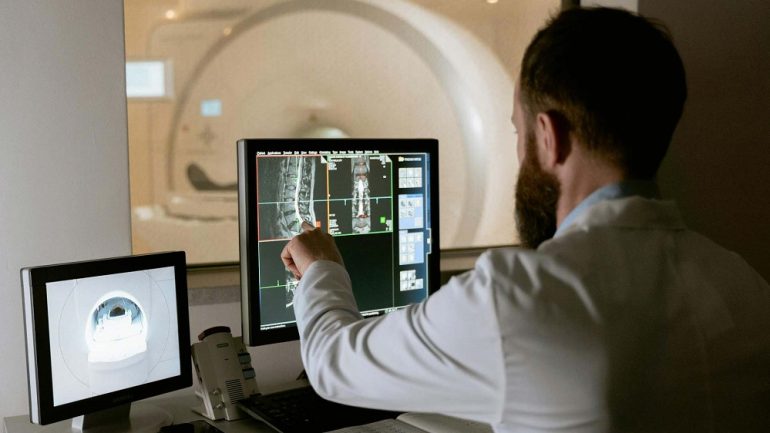
In diagnostic imaging, specialized algorithms are embedded directly into point-of-care devices. Rather than operating as external verification tools, these machine learning models function as inline co-pilots during live procedures. For instance, in gastroenterology, intelligent software tools scan visual frames during colonoscopies to detect deep-seated polyps that might elude the human eye, reducing missed detection rates significantly.
In cardiology, predictive analytics process subtle variations in electrocardiograms to flag early signs of structural heart diseases, such as aortic stenosis, long before acute events occur. This structural shift moves medicine from a reactive discipline to a highly proactive model of early intervention.
The Convergence of Decentralized Ledgers and Global Interoperability
Securing patient data and ensuring seamless communication across diverse hospital ecosystems has been a long-standing challenge. Distributed ledger technology, commonly referred to as blockchain, is addressing these historical structural friction points. By establishing immutable cryptographic records, health systems can now share critical diagnostic data without compromising security or violating stringent compliance mandates like HIPAA.
The utility of these decentralized platforms extends far beyond data storage. Emerging frameworks leverage decentralized identifiers to create verifiable credentials for medical personnel. This development allows for unprecedented clinical portability, enabling specialists to validate their expertise across international borders instantly.
Furthermore, programmable financial structures built on secure ledgers are streamlining international medical transactions and automated insurance reimbursements. When a specific clinical criterion is met and verified by an internal health system, smart contracts can trigger instant billing settlements, eliminating weeks of administrative delays and reducing overhead costs for providers.
Minimally Invasive Robotics and Intelligent Surgical Co-Pilots
Surgical suites are evolving rapidly as precision robotics become standard infrastructure. Modern robotic-assisted surgical systems allow clinicians to execute highly complex, minimally invasive procedures through microscopic incisions. These platforms translate human hand movements into hyper-precise microscopic actions, completely neutralizing natural physiological tremors.
Enhanced Visualization and Spatial Computing
Surgeons now operate with augmented reality overlays and three-dimensional, high-definition visualization tools. These spatial computing frameworks project real-time structural maps directly onto the surgical field. By visualizing blood vessels, nerve pathing, and tumor margins embedded beneath tissue layers, surgical teams can navigate delicate anatomical pathways with unparalleled accuracy.
Preoperative Rehearsal Through Digital Twins
The development of digital twins, virtual replicas of specific biological organs or entire physiological systems, is altering preoperative planning. Using high-resolution data from CT scans, MRIs, and ultrasound diagnostics, specialized software can construct a perfect functional replica of a patient’s heart or liver.
Surgeons use these digital assets to simulate and rehearse complex interventions, such as heart valve replacements, before making the first physical incision. This approach allows teams to anticipate specific geometrical challenges and custom-tailor the deployment of medical devices to the individual’s unique anatomy.
The Dawn of Precision Genomics and Regenerative Therapeutics
The concept of standardized, one-size-fits-all pharmacology is fading as precision genomics moves into active clinical applications. Advanced gene-editing tools, particularly CRISPR-based platforms, are tackling inherited disorders at the molecular source. Instead of managing the chronic symptoms of conditions like beta-thalassemia or specific genetic blindness variations, targeted in-vivo and ex-vivo gene editing therapies work to repair pathogenic mutations permanently.
Concurrently, regenerative medicine is bridging the gap between engineering and biology. By utilizing induced pluripotent stem cells, researchers and bioengineers are developing automated bioreactor systems designed to grow functional human tissues.
-
Organ-on-Chip Models: Microfluidic devices lined with living human cells mimic the true physiological responses of entire organ systems, accelerating drug toxicity testing without human or animal risk.
-
3D Bioprinting: Advanced printers utilize specialized bio-inks composed of living cell matrices to construct anatomical scaffolds, paving the way for eventual full-scale organ transplantation.
-
Targeted Biomaterial Delivery: Microscopic vectors are engineered to navigate the bloodstream and deposit custom molecular payloads directly into diseased tissues, completely bypassing healthy cellular structures.
Decentralized Clinical Trials and The Virtual Hospital Network
The physical constraints of traditional medical facilities are being decentralized by the Internet of Medical Things and advanced telecommunication infrastructure. The traditional paradigm requiring patients to travel long distances for specialized clinical observation is being replaced by virtual hospital networks. Remote patient monitoring systems utilize medical-grade wearables to track heart rate variability, blood oxygen saturation, body temperature, and continuous glucose levels in real time.
This continuous data flow has revolutionized the execution of clinical trials for new pharmaceutical developments. Hybrid and decentralized trial designs allow diverse, global populations to participate from their homes. Continuous sensor data provides researchers with high-fidelity, real-time safety biomarkers and quality-of-life endpoints, replacing intermittent, subjective clinic questionnaires.
For chronic disease management, these connected devices feed directly into automated triage platforms. If a patient’s physiological metrics cross a critical threshold, the system immediately flags the anomaly, prompting an immediate telehealth intervention before an emergency emergency room visit becomes necessary.
Streamlining Administrative Logistics via Low-Code Automation
Behind the clinical breakthroughs lies a critical operational shift focused on mitigating the severe workforce shortages impacting the global healthcare system. With millions of clinical staff vacancies projected over the coming decade, health systems are leveraging low-code and no-code automation platforms to eliminate structural administrative friction.
These citizen-development platforms allow frontline nurses, pharmacists, and administrative directors to build custom utility applications without deep software engineering expertise.
Clinics use these tools to automate patient intake formatting, streamline inventory tracking for specialized pharmaceuticals, and optimize complex staff scheduling matrixes. By shifting high-volume documentation and routine operational preparation to automated background systems, healthcare professionals can reclaim their limited time, refocusing their attention entirely on direct patient care and complex clinical decision-making.
Frequently Asked Questions
How does agentic AI differ from standard generative AI tools used in hospitals?
Standard generative AI tools focus primarily on passive documentation tasks, such as transcribing a conversation between a doctor and a patient or summarizing an existing medical file. Agentic AI, conversely, possesses reasoning capabilities that allow it to coordinate actions across multiple independent software systems. It can monitor real-time vital signs, query laboratory databases, flag potential adverse drug interactions, and proactively alert care teams with specific treatment recommendations, operating as an active coordinator within the clinical workflow.
What role do stablecoins play in modern healthcare systems?
Stablecoins and programmable tokens function as the operational layer for cross-border medical commerce. They allow international patients, insurers, and medical institutions to settle financial transactions instantly without navigating traditional correspondent banking networks, which often introduce high fees and multi-day delays. These digital assets embed compliance protocols directly into the payment, ensuring that financial auditing trails match the corresponding medical necessity records automatically.
Are digital twins of human organs legal for diagnostic use?
Digital twins are utilized as highly advanced simulation and visualization aids to support clinical decision-making. Regulators review the specific software algorithms that generate these models to ensure spatial and functional accuracy, particularly when used to plan complex surgical interventions or configure customized medical implants. The digital twin serves as a highly precise predictive tool under the absolute oversight of the licensed medical professional.
How do organ-on-chip models accelerate the development of new medications?
Organ-on-chip models utilize microfluidic structures lined with living human cells to replicate the precise mechanical and physiological behavior of human organs, such as the lungs, liver, or kidneys. Because these chips mirror human biology far more accurately than traditional petri-dish cell cultures or animal models, pharmaceutical researchers can identify toxic reactions or lack of therapeutic efficacy much earlier in the development lifecycle. This reduces the time and immense financial cost required to advance a promising compound into human clinical trials.
Can low-code applications maintain strict patient data privacy standards?
Yes, modern low-code development platforms utilized by healthcare networks are built on enterprise cloud structures that adhere strictly to federal security frameworks, including HIPAA, SOC 2, and FedRAMP compliance. These platforms feature built-in encryption, strict access control governance, and automated audit logs. This allows clinical staff to design custom operational tools while ensuring that the underlying patient data remains fully isolated and protected against unauthorized exposure.
What are the main limitations hindering universal adoption of robotic surgery systems?
The primary barriers to universal adoption are the high initial capital acquisition costs of the hardware and the specialized training pipelines required for surgical teams to master the platforms. While these systems offer superior clinical precision and dramatically faster patient recovery times, smaller community clinics and rural facilities often lack the financial liquidity and operational volume to justify the infrastructure investment, leading to uneven geographic availability.