




The landscape of modern education is undergoing a profound structural shift. For generations, the traditional classroom model relied entirely on synchronous, face-to-face instruction led by an educator at the front of a physical room. While this model has historical merits, it often enforces a rigid pace that fails to accommodate the diverse learning speeds, backgrounds, and cognitive styles present in a typical student cohort.
Conversely, the rapid rise of digital educational technologies introduced fully remote learning frameworks. While remote options offer unprecedented accessibility, they frequently lack the critical human elements of peer collaboration, immediate physical mentorship, and community accountability.
Blended learning addresses this educational dichotomy. By deliberately fusing traditional face-to-face classroom instruction with structured online learning components, blended learning creates a cohesive, hybrid pedagogical framework. This approach is not merely about introducing computers into a classroom or assigning digital homework. Instead, it represents a fundamental redesign of the instructional model to optimize the unique benefits of both physical human interactions and digital autonomy.
The Core Models of Blended Learning
Blended learning is not a singular, uniform methodology. Educational institutions implement various operational models tailored to the age of the student body, the nature of the academic subject, and the structural resources available.
The Rotation Model
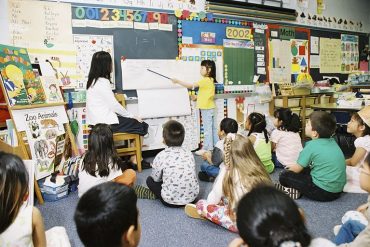
In the Rotation model, students cycle through distinct learning stations on a fixed schedule. At least one of these stations involves online learning, while other stations include small-group instruction, peer-to-peer projects, or pencil-and-paper assignments. A highly popular variation of this framework is the Station Rotation model, which occurs entirely within the confines of a single classroom. Another variant, the Lab Rotation model, shifts students from a standard classroom to a dedicated computer laboratory for the digital portion of their coursework.
The Flipped Classroom Model
The Flipped Classroom represents a total inversion of historical homework and lecture dynamics. In a traditional setting, students listen to a content lecture in class and apply the concepts independently at home through homework assignments. In a flipped framework, students engage with digital lectures, read comprehensive materials, or watch instructional videos at home before the class meets. Consequently, the physical classroom time is liberated for active problem-solving, deep debates, laboratory experiments, and direct teacher intervention when students hit cognitive roadblocks.
The Flex and A La Carte Models
The Flex model relies heavily on online platforms to deliver the vast majority of the curriculum. Students work through the digital modules at their own pace within a physical school building, while an onsite teacher provides targeted, face-to-face support, individual tutoring sessions, and small-group breakout lessons on an as-needed basis. The A La Carte model allows students to take a fully online course alongside their traditional brick-and-mortar classes, giving them the flexibility to study niche subjects that their physical school may not formally offer.
Enhanced Personalization and Student Autonomy
One of the most significant advantages of a well-executed blended learning framework is its inherent capacity to provide mass personalization for a diverse student population.
Pacing and Cognitive Mastery
In a conventional lecture-based environment, an instructor must target the middle of the class performance curve. This approach accidentally alienates both struggling students who cannot keep up and advanced students who find the pace painfully slow. Digital learning components eliminate this issue by granting students absolute control over the consumption of foundational content. Students can pause instructional videos, rewind complex explanations, re-read passages, and consult digital glossaries as many times as necessary without the social pressure or embarrassment of pausing an active class. Advanced learners can move rapidly through baseline modules, preventing boredom and keeping their academic engagement high.
Data-Driven Differentiated Instruction
Blended learning ecosystems continuously track student performance metrics through integrated learning management software. As students complete online quizzes, interactive activities, and digital modules, the system aggregates real-time data regarding comprehension levels. Teachers can access comprehensive dashboards that reveal precisely which concepts are causing widespread confusion and which individual students are falling behind. Armed with this empirical diagnostic data, the educator can abandon generic lectures and instead design highly targeted small-group interventions during physical class hours to correct specific misunderstandings.
Optimization of Classroom Interpersonal Dynamics
Moving foundational content delivery to digital platforms alters the daily role of the contemporary educator, shifting them from a gatekeeper of information to an active learning facilitator.
Elevated Peer Collaboration
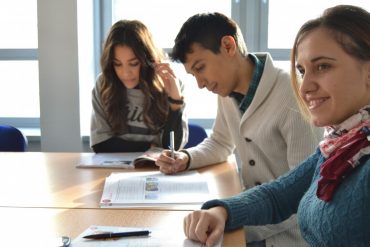
When students come to class already possessing a baseline familiarity with the daily topic via pre-class digital modules, physical classroom hours can be dedicated to collaborative problem-solving. Students work together in structured teams to tackle case studies, build physical models, or engage in rigorous debates. This dynamic reinforces the academic material while simultaneously cultivating essential soft skills such as verbal communication, conflict resolution, compromise, and collective project management.
Strengthened Teacher-Student Relationships
In a standard classroom model, a teacher spends a significant portion of the hour managing behavior and delivering standardized monologues, which leaves minimal time for individual interaction. A blended framework drastically lowers the student-to-teacher ratio during active instruction by breaking the class into smaller, rotating groups. This structure allows the educator to sit down with four or five students at a time, facilitating meaningful academic dialogues, offering personalized mentorship, and building trust that is difficult to foster in a massive lecture hall.
Long-Term Skill Acquisition and Institutional Efficiency
Beyond immediate academic performance, blended learning equips participants with systemic capabilities essential for navigating a highly digitalized global economy.
Cultivation of Digital Literacy and Self-Regulation
Success in a blended learning environment requires students to develop strong self-regulation, time management, and proactive goal-setting skills. Because a portion of the learning is asynchronous, individuals must learn to organize their study schedules, resist online distractions, and navigate digital interfaces effectively. These internal competencies match the operational requirements of modern corporate environments, where remote collaboration, self-directed project execution, and platform adaptability are standard professional expectations.
Resource Optimization and Institutional Scalability
For educational institutions, blended learning frameworks offer unique logistical and financial advantages. By shifting a portion of the course delivery online, physical campuses can optimize space utilization. For instance, a university can accommodate larger student cohorts by scheduling alternating physical laboratory sessions while keeping general lectures virtual. Furthermore, digital textbooks and cloud-based assignments drastically reduce institutional spending on physical print materials, lowering the ecological footprint of the campus while ensuring that course information can be updated instantly without purchasing entirely new textbook editions.
Frequently Asked Questions
What is the precise boundary separating hybrid learning from blended learning?
While the terms are frequently used interchangeably in casual conversation, a distinct pedagogical difference exists. Hybrid learning focuses heavily on balancing the physical presence of students, often creating an environment where a portion of the class attends in person while another group joins remotely via live video streams simultaneously. Blended learning does not necessarily alter the physical attendance schedule of the student body. Instead, it focuses on blending different instructional methods, systematically integrating digital modules and self-paced online coursework directly into the curriculum of students who meet regularly in physical classrooms.
How does blended learning prevent students from succumbing to digital fatigue?
Effective blended learning design prevents screen exhaustion by maintaining a strict equilibrium between analog and digital activities. It does not replace physical textbooks, handwritten notes, or face-to-face dialogues with continuous screen time. Instead, the digital tools are utilized efficiently for content acquisition and data tracking, while a major portion of the school day remains anchored in tactile lab work, verbal debates, small-group interactions, and collaborative projects that keep students physically engaged.
What strategies can schools employ to support students who lack reliable internet access at home?
To bridge the digital divide, institutions implementing blended learning often utilize flexible models like Station Rotation, where all necessary online modules are completed entirely within the physical school building using campus hardware. Additionally, schools can partner with community centers, configure school buses with mobile internet hotspots, provide downloadable offline versions of course materials that do not require an active internet connection to read, and establish device lending libraries.
Why do some educators initially resist transitioning to a blended learning model?
The shift to blended learning requires a comprehensive re-engineering of lesson plans, grading frameworks, and classroom management techniques, which demands significant initial time and effort. Teachers must learn to navigate new software, develop digital content pipelines, and master the art of facilitating small-group dynamics rather than delivering traditional front-of-room lectures. Without robust, ongoing professional development and administrative support, this transition can feel overwhelming to experienced educators.
How are laboratory sciences or performance arts adapted to a blended learning framework?
In these highly tactile disciplines, the blended model uses digital interfaces to handle the theoretical prep work, safety briefings, and equipment orientation modules before students enter the physical space. For instance, chemistry students might complete interactive virtual simulations of an experiment at home to understand the molecular reactions, allowing them to maximize their physical lab time performing the actual experiment safely and efficiently without wasting resources on basic procedural explanations.
What role does artificial intelligence play in modern blended learning management systems?
Artificial intelligence serves as a backend acceleration tool for the personalization component of blended learning. Modern software engines analyze the speed, accuracy, and error patterns of a student working through a digital module. The algorithm then automatically adjusts the difficulty curve of the subsequent questions, recommends specific review videos, or flags the profile of the student for targeted face-to-face intervention by the physical teacher during the next class session.
Does blended learning decrease the total socialization time available to developing children?
When designed correctly, blended learning actually increases meaningful, high-quality socialization compared to traditional models. In a legacy classroom, students are required to sit silently and listen to a lecture for long stretches, meaning that talking is often penalized as a disruption. A blended framework shifts passive listening to an independent activity, allowing physical school hours to be structurally designed around active teamwork, peer mentorship, intellectual debates, and collaborative group problem-solving.
